Showing posts with label Day to Day. Show all posts

Thursday, November 10, 2011

Some Truths About Farming

Farm truth #1: There are tons of projects around the farm that need to be done in a farmer's spare time.

Take the barnyard, for example.

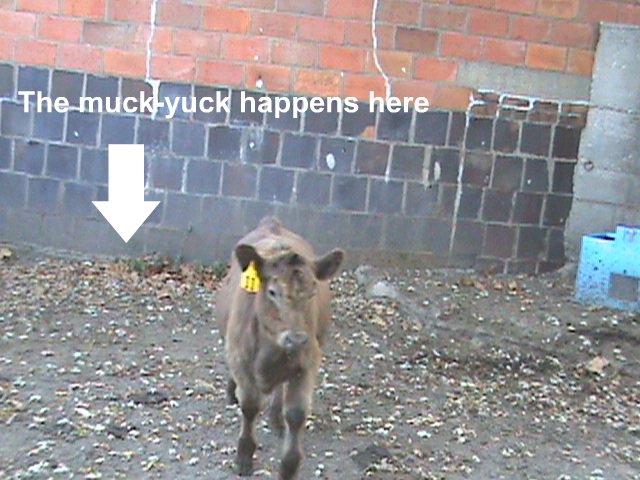
The lovely cows, during the lovely dog days of summer, love to wallow around in their own lovely muck in order to get out of the lovely heat and humidity.

The result is a not-so-lovely barnyard and a bunch of cows that can suffer from a not-so-lovely hoof condition called foot rot.


Farm truth #2: Farmers have no spare time to finish these projects.

That's right, I said it. Farmers have no spare time to do extra projects around the farm because they're too busy with:

1) their off-farm jobs
2) their kids
3) their civic duties, and
4) their daily farm work.

It's stressful, people.

And to prove it, just look at how stressed I am at my off-farm job!


Farm truth #3: No one cares to listen to you whine about not having any spare time to finish your farm projects.


No need to elaborate on this one.   

Farm truth #4:  If you whine loud enough, a few helpers may appear out of nowhere. 


Yes.


Yes!


Double yes!!

Farm truth #4: There are many people who are happy to congratulate you when you finally get around to finishing those farm projects.


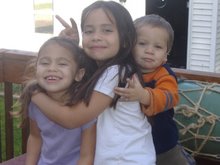
Farm truth #5: Kids love to write their name in fresh cement.


Farm truth #6:  Farmers love getting a good project done.


The end.

Wednesday, April 27, 2011

Scott Russell Sanders

"People who root themselves in places


are likelier to know and care for those places


than are people who root themselves in ideas.


When we cease to be migrants and become inhabitants,


we might begin to pay enough heed and respect to where we are.


By settling in, we have a chance of making a durable home for ourselves,


our fellow creatures,


and our descendants."


--Scott Russell Sanders

Sunday, April 10, 2011

Boys 1, Girls 1

Calf #2 was born this morning. It's a girl!!

She's been adorned with a very stylish #39 earring and officially welcomed to the clan.

Tally so far? Boys 1, Girls 1.


Friday, April 8, 2011

The Official Start of Spring

Most people don't tend to think of spring as a date on a calendar.  Sure, March 20th is the first official day of the season, but if it's a blustery, wintry March 20th does that really count?  And if it doesn't, what does? 


For example, I'm friends with many birdwatchers.  I can't count how many times I've heard them talk about their fist robin or red-winged blackbird of the season, exclaiming "Spring is here!". 


And what gardener doesn't joyously exclaim "Spring is here!" when they see the first daffodil, with its bright yellow petticoats, adorning the yard?


But on the farm?  On the farm nothing quite says "Spring is here!" like the first calf of the season.

In Irish Grove, Spring officially started on April 8, 2011.


  At 9:23 a.m. to be exact.

Friday, August 27, 2010

Tag on the Farm

I've always loved playing tag.  It gives you a reason to sprint, which is an exhilarating feeling.  I mean, how many opportunities do you really get to just full-on run as fast as you can? 

Except this game of tag is a little different.  This time, we're tagging calves.  As in ear-tags.  And these calves can not only run super fast, but they can jump, bellow, kick, flip-flop, wiggle, scream, pant, and foam at the mouth like nobody's business.  Which in and of itself isn't so bad until you add in an angry, over-protective mother who weights 1200 pounds who also knows how to sprint. 

We try to tag the calves when they're little.  5 hours old?  Perfect.  2 days old?  Not bad.  3 weeks old, like last night's bullcalf?  Not a great idea. At 3 weeks, these suckers are big, strong, fast and super stubborn.  They also can make a noise like you've never heard before. 

Last night presented the perfect opportunity, though, as the mother had walked down to the pasture and left her calf resting peacefully in the barnyard.  Ha!  The fools!  We shut the gate to keep the calf in and the mother out, and the fun started.

Marcel was on lasso, I was armed with the ear tagger.  The calf was running wild around the barnyard, but made the mistake of heading into the barn.  Ah-ha, gotcha!  Marcel caught him around the neck and the fun began.  This bullcalf was strong, and started whipping Marcel around the entire barnyard.  Marcel was hanging on, trying to get ahold of him to trip him up, but there were hooves flying every which way--and let me tell you, these little calves kick HARD.  Finally the calf jumped close to the round bale cage.  Marcel took advantage and pushed his body against the cage, wedging him in.  I ran up and tagged him as quick as possible:  #39.  The little bugger. 

In the meantime, the kids had entered the barnyard to see if they could help.  They could not.  But they left the gate open and Honeysuckle escaped into the yard.  First off, she was scared to death from all the bellowing and bawling coming from her buddy.  And second, she'd never been anywhere outside of the barnyard before, so was immediately disoriented. 

Rodeo #2 formed, trying to catch Honeysuckle and get her back in.  I yelled at Ana to grab a bottle, the one comfort she knows, while Marcel and Rob were trying to keep her out of the road.  We live on a blind hill, the calf was about 6 feet from the road, and we could hear a car speeding in our direction.  (A good reason to SLOW DOWN on rural roads, people!)  Honey kept running erratically towards the road, then back again.  Luckily she froze when the car got close--it was a full-sized van. 

How traumatic would that have been?  Shudder. 

Marcel finally lassoed her, so was able to keep her from the road, and by then I had the bottle in hand and led her back to the barnyard.  Whew!  What an evening!

One more to go, though.  We had to drive down to the pasture to find this one--a heifer calf, about 10 days old.  She's still pretty sleepy, though, so tagging her wasn't the issue.  Keeping the mother away was.  After Marcel lassoed her around the neck, we slowly chased the mother and babe around until they were close to the fence.  I drove the PUG inbetween the mom and babe, at which point Marcel grabbed her and tried to tag her.

Only problem?  The tag didn't clasp correctly.  So now he's trying to get it to clamp down and secure itself while the mother is chasing him around the PUG.  I'm warding her off with a stick, but don't want to use it forcefully unless she's really going to attack him because we rely on trust to move these cows from paddock to paddock.  Thankfully she's calm enough to not attack, and only wants to know that her babe is OK.  Job done, Marcel tired, excitement had. 

We really need a sophisticated corral for these jobs.  Any anonymous donors out there? 

Anyone?  Yoohoo!  Hello!?  Tap-tap-tap.  Anyone?

Damn.

Friday, August 13, 2010

Hot Mamas

We are in the middle of a typical August heat-wave.  You know the kind.  The kind that turns the winter-haters into winter-aficionados.  The kind that creates a perpetual background humming noise, which is the din of a gazillion air-conditioners straining to keep things cool.  The kind that gives you that lovely summer glow, a.k.a. sweat-shine.  The kind that has you sleeping in your skivies because it's so bleepin' hot in here!

I'm weathering the heat just fine.  You see, I've got that typical Irish Catholic point of view that a little suffering is good for the soul.  Marcel's holding his own--his Panamanian alter-ego might tell you to suck it up, because this ain't nothing compared to back home in Panama.  The real Marcel, of course, would never say that.  And the kids are a little more lethargic than usual, but surprisingly uncomplaining.  (We don't have air-conditioning.  Air-conditioning is for wimps.)

But the cows?  The cows aren't happy.  And who, really, would blame them?  They're stuck in the middle of a field with lots of good food and fresh water, but also lots of flies and the blazing sun beating down on them all day.  

They've responded to the heat with a little revolt.  Perhaps you would call it a small protest.  It's just a small one, but it's there all the same.  They've started purposely tipping over the moveable water tank.  That's right, they tip it over and slosh around in the ensuing mud like a bunch of pigs.  Pigs, I tell you!  Since when did a cow aspire to pig-like status?

It's actually quite a problem, though.  Because while the huge wave and ensuing splash of cool water and mucking up of my lovely pasture assuredly feels great at the moment, about 15 minutes later they get a little  thirsty.  Sure, there's a trickle of water continuously flowing out, putting a lovely strain on the water pump, have you.  But when you've got 40+ hot and thirsty cows, a trickle ain't gonna cut it.

No lecturing by me is gonna make them any happier, nor will it stop the water-tippin'. So, I'm wondering if this isn't just a bad idea.  You know, keeping them on our grazing plan, out in the sun in this terribly-hot weather.

The strict (successful) graziers might say something like, "grazing-cattle must be tough and able to withstand the extremes.  You gotta push them to the limit and select for hardiness.  How are you going to know which cows are suited to grazing if you provide them with pillows and soft blankets at the first weather-test?"

The traditional cattlemen, the grain feeders, might say something like, "This proves that rotational grazing doesn't work, that it's bad for the cows, and that the confinement and/or grain-based feeding system is ubiquitous because it's the only one that works."

(True graziers and grain-feeders might say this, or they might not.  They are a varied lot.)

The mother in me would bring them in to the tree-lined pasture for a few days, to give them a little relief from the hot sun.  Which means they would really just stand in the round barn all day, pee and poop constantly until the barn floor is covered in a green soupy mess perfect for breeding more flies, skin infections, and diarrhea in the calves.

The farmer in me, though, is inclined to leave them in the pasture and just check on the water more often.  Why?  Not because I'm a big meanie, although you can accuse me of it if you'd like.  But because for one, I don't want skin infections, flies and diarrhea.  And two, if we brought the cows in for every weather-event, be it large storms, heavy rainfall, extreme heat, stiff winds, extreme cold, etc....they'd never be in the pasture!   


I'm open to suggestions, though.  Let's hear what ya got.

Wednesday, June 30, 2010

Left Behind

People have left many things behind when they come to buy eggs.  They've left egg cartons and money in the envelope, of course, but also sippy cups, shopping receipts, toys, etc.

Today someone left behind their child
.


P.S.  We were home, child was playing with the chickens, all was well.

P.S.S. Can it get any crazier than that?

P.S.S.S. Don't answer that please. I don't wanna know.

Saturday, April 24, 2010

Blog Catchup #2: Going Retail

Yes, you read that right.  Irish Grove has gone retail.

Anyone who knows me personally knows that I don't move too quickly.  I decide to do something and then I have to think about it for awhile.  Some people may call that procrastination.  But for me, it's my own way of time-testing my ideas to make sure my decisions are sound.  My nature is to be impulsive and I've found out the hard way that impulsiveness is a terrible trait to have, usually by making a bloody fool of myself.

So, yes, I finally applied for my egg broker's license after deciding to do so about a year and a half ago.  Which means this decision must be really sound.  And I'm taking about 15 to 20 dozen eggs per week in to Choices Natural Market, where they are being sold next to some "Big Organic" eggs.  Time will tell how they fare, but for now it's pretty exciting to see our products in a store. 

If you're in Rockford and want to see for yourself, look for our label:


Try a dozen and let me know what you think.  I'm pretty sure you won't be disappointed! 

Tuesday, April 20, 2010

Catch-Up #1: Manure Spreading

I realize that winter and snow are very 'yesterday', but I'm playing blog catch-up. It has been such a crazy winter that I've left you out of the loop on farm happenings. In fact, I've even left you out of the poop loop.

That's right. We had a lovely, odoriferous time not so long ago, on a nice, wintry day in March.


The picture above was my view from the driver's seat of our JD 4020 tractor. I realize that JD 4020 means nothing to most of you, I just added that to prove how farmer-ish I really am.


Marcel was working the blue tractor, loading up the spreader with manure.  (That's a NH TL90A, in case you thought I didn't know.) 


It takes a little more finesse to work the loader bucket.  I can do it, but Marcel can do it better.  See?  I'm farmer-enough to even admit that someone's better than me. 

Oh wait, farmer's never admit shit like that.  Strike it from the record.


Once the spreader is loaded up, off I go.  Driving a 4020 with a loaded manure spreader takes finesse, too.  Finesse and lots of skill.  Ahem.

Anyways, I make my way through the stone-quarry pasture, out onto the road and up to the field south of our house.  The field will be put into corn this year, so any extra nitrogen is always helpful.

Here's the view as I spread the goods onto the field:


You use a hydraulic control to lift the back gate and then start the PTO, which spins some forks at the end of the spreader.  The PTO also moves some fins on the floor of the spreader which slowly push the manure from front to back until it's all out and on the ground.  Pretty nifty. 

And smelly.  "Smells like money", as the farmers like to say. (God, I'm impressing even myself today.)


In the meantime, the cows are totally put out and complaining, and a few are acting all uppity.  I  overheard one say, "Humans!  Look at 'em.  They can't get enough of our poop.  They're squirreling it away as fast as humanly possible, as if it's something other than yesterday's hay bale.  God they're gross."

Hm.  I guess I failed to impress after all.

Thursday, July 9, 2009

Letter to the Editor

A local foods advocate published an article in the local Rockford Register Star about the health and environmental benefits of pastured meats. Sure enough, a rebuttal of sorts was written as a letter to the editor. Here's what it said:

The article about pasture-fed meat (“Pasture-fed meat packed with benefits,” Go, June 17, 2009) contained several misconceptions.

Livestock raised on pastures is not less stressed or healthier. According to researchers in Canada, Australia and Germany, the opposite is true.

Livestock raised in pastures — also called “free-ranged” — is more prone to diseases and parasites and is exposed to weather extremes, including cold, rain and wind. Such animals are also more vulnerable to wild predators, such as coyotes, and must constantly forage for food and places to rest. As a result, mortality rates are higher.

Feedlots and other confinement systems enable producers to closely monitor the health of animals under their care.

As to the statement that meat from pasture-fed livestock contains higher levels of omega-3 fats: Omega-3 fat is found in soybeans and fish meal — feed ingredients not available to pasture-fed animals but commonly fed to animals raised in feedlots.

Pasture-feeding is not more environment-friendly. Animals on range often foul streams and waterways. On the other hand, feedlot cattle recycle food that consumers do not want to eat.

Ever wonder what happens to all that stale bread at the grocery store? It is fed to animals in feedlots.


As you can see, the guy's logic is a little screwy. Anyways, the local foods advocate asked me to write a rebuttal to his rebuttal, as I am a pasture-based farmer. Here's my letter (hoping the paper doesn't let this go on and on):


As manager of a grass-finished beef operation, I find Mr. ___________'s rebuttal to your article on pasture-fed meats interesting. He is correct that feedlots recycle many unwanted food items. Stale bread may not alarm anyone, but The Wall Street Journal reported that feedlot cattle also recycle “cookies, licorice, cheese curls, frosted wheat cereal, Tater Tots, Kit Kat bars, uncooked French fries, pretzels and chocolate bars.”

Feedlot operators monitor the health of their herd by assuming they are all sick. After reading that feed list, I don’t blame them. As a result, all feedlot cattle receive daily doses of antibiotics to “preserve health”. In contrast, pastured animals are naturally healthy and receive daily doses of sunshine, fresh grass, and the freedom to move about. Antibiotics are rarely needed for a pastured animal (and never used on organic cattle).

Cows shouldn’t eat fish and can produce Omega 3’s on their own by eating grass. Cow waste should drop onto a grassy field where it fertilizes the soil. And yes, cows can die--either of natural causes or unnatural living conditions. I invite the public to visit both a feedlot and a pasture-based farm. Inform yourself and support whichever farm-model you find acceptable.


I know I left a lot out, but had to keep it to 200 words. Anyways, I tend to be a bit long-winded. We've got to think of the poor newspaper-reading public, you know.

Saturday, June 13, 2009

Of Life and Death

The last time I wrote about learning opportunities I was scoffing at a silly mistake I made that could have broken a part on our tractor. In all honesty I was making a joke to deflect my embarrassment at being a dope. A dope that forgot to unplug the tractor before she drove it.

What I've come to realize, however, is that being a dope and breaking a tractor part or two is the least of my worries when it comes to the farm. The farm is about more than that. It's about more than a simple tractor part, and it's definitely about more than my silly vanity and pride.

The farm is about life and death. Life and death. It's as simple and basic as that.

The lessons I need to learn and the opportunities that have arisen to provide me with those very lessons have been numerous and varied this spring, as are the emotions that come with the living and dying on this farm. These circumstances have come at a time when I have been feeling impatient with the farm's progress, with the organic conversion, and with the cows who hadn't calved and who also hadn't been very cooperative in my new grazing systems. "I've been at this three years," I kept muttering. "It shouldn't still be this difficult."

Yet three years didn't prepare me for this:


This is our bull and a pregnant cow lying dead in our pasture. They were struck by lightning during a thunderstorm.


Two good cows gone. All of a sudden my grazing difficulties don't seem all that important. Instead, my impatience was transformed into dismay and concern. Our bull was so gentle and easy-going. How could we replace him? And this mother cow was one of our lead cows, not to mention that she was due to calve any day now. Death on the farm. It happens, but who expects to find this scene after a routine thunderstorm?

The cows were extremely distressed, so we moved them to another pasture so we could remove the carcasses. In fact, I think it was stress that put one heifer into labor. Our very first calf of the season was born that night. Ironically, the bull's first offspring was born the day he died:

We named her Storm. And she is a beautiful, spunky little Murray Grey.

Life and death at the hands of a lightning bolt.

The shock wore off after a few days as I busied myself with smaller farmer duties--you know, the ones I like to do because I can manage them. The ones that rookies can't screw up. (And if we do, we can write funny little stories about them.)

But then my favorite heifer was in labor, number 11, and she was in trouble. She had progressed to the point where the calf's hooves were coming out and then stalled. We let her work for 2 hours wondering if we should pull the calf or let her alone. A cow will suspend her labor if stressed, so if you bother her too soon you'll cause problems. And yet if you let her go too long, both she and her calf could die.

As a rookie, I have no experience in making these calls. And the literature says you just have to have a "feel" for it. Great. That's helpful.

Finally we decided to pull it. We corralled her into the chute and called Farmer Scott from down the road. He's a dairy farmer and is absolutely not a rookie. He showed us how to hook the chains around the calf's second foot joint and then how to pull it down and away from her backbone. He and Marcel strained, and I mean strained, for about 10 minutes. They got the calf out and he lived, but barely. And number 11 was OK. Ahhh, life. Sweet, sweet life.

Disaster was averted and a lesson was learned.

Or so I thought. Because today we lost one. A nice large heifer calf died because we didn't pull her soon enough. We acted quicker than last time, but the placental bag hadn't broken. Farmer Scott came to help once more and told us that if the bag isn't broken in time, the mother can't get enough traction to push the calf out and the calf suffocates.

I had seen the intact bag and thought it had meant there was time. Precious time, ticking away for that poor little heifer calf. "It's hard to say," said Farmer Scott. "Sometimes an intact bag means you should leave the mother alone a little longer. You just have to get a feel for it."

There it is again. That "feel" thing. The way I see it, the "feel for it" is a farmer's way of saying you need to be experienced enough to know. And as easy as it may be to learn to drive a tractor or make good hay, this calving thing is throwing me for a loop. A very precarious loop. After two difficult births, it's hard to say if I'm really getting a "feel" for calving or not. The first time we waited longer and had a live calf. The second time we acted and it wasn't soon enough.

I am, however, getting a "feel" for the ups and downs of farming. The joys and sorrows. The celebrations, the frustrations...the life and death of it. I'm just not sure I have enough experience to know how to deal with it.

Tuesday, March 10, 2009

Sorting Cattle

In Irish Grove, the time has come to separate our young Murray Grey calves from their mommas.

Unfortunately for the calves, this is pretty darn awful. They've got a good life...I mean, who doesn't like a little milk with their hay? Add in a mother's watchful eye, some playful nudges here and there.....well, there's no better feeling in the world than Mom.

But the mother cows are pregnant, you see. And if you've ever been pregnant and nursing a babe at the same time, you'll know that it isn't much fun. And then you've got a certain bull with a certain, um....drive to, um......well, you know....checking out those poor little heifers, all innocent and cute and much too young to be initiated into such wordly matters.

Yes, it was time to move the babes onto the next phase of life.

Of course, we picked the most lovely of all late winter/early spring days. It was so lovely, in fact, that more than a few Irish Grove farmhands tried to get out of the job.

But being the whip-crackin', ass-whoopin' farmer that I am, I was having none of it. I mean what kind of farmer reschedules a work day because of a little rain?

Marcel and I are all geared up and ready to get working


and yet Marcel's still stalling on account of the rain, the wimp.


When you separate the cattle herd, all of a sudden space becomes an issue. All the animals need access to a water tank and shelter. We've got two barns and two groups of cattle. No problem, right?

Wrong.


'Cause we need shelter and water for the horses and goats, as well. And if you've read this blog for awhile, you'll know that Lucero and cows don't mix.

So we spent a few hours moving the horses and goats to the chicken pasture. First we had to get the animals to move, and then we had to move the gear. Or bale cages, to be more specific.

You see, horse bale-cages and cow bale-cages are different.


The tractor has ahold of a horse hay-ring. You can see that the sides are open at the top. In the background is a hay-ring for the cows (on its side). There's a top bar on that one with diagonal supports. The cows have to stick their heads through the holes to eat while the horses get to raise their heads high and chomp in fashion.

Life is stacked against the cows at most every turn like that.

Anyways, Marcel brought one cow cage down from Mom's place for the calves, changed the horse cage over into the chicken pasture, and then filled them both with hay. In the meantime, I was very handily opening and shutting the gates for him. Yeah, it's a no-brainer, but also an immense help and time-saver for the tractor driver.


After everything was in place, I walked the lane down the hill and back up to Mom's, opening all the gates through which we'd soon be running the calves. Did I mention it was raining?


It's pretty much not a good thing when your pasture has been converted into a mini river.

Anyways, to make an already long story a little bit shorter, we got the calves shut in the round barn and sorted out rather nicely. I gave my mom the camera to take some action shots, but then we had to ask her to hide around the corner because her presence in the doorway was keeping the calves from wanting to run out. Sorry Mom.

So unfortunately I have no pictures of me manning the exit gate, swinging it open to let a calf out when it came round the bend and quickly shut again to keep the momma's in. This was pretty hard, seeing as both my boots and the gate were sticking, in that suction-type way, in the ankle-deep "mud".

No photos of Gordy, our most recent Irish Grove addition (and Mom's new beau), as he dodged the bull and bravely shoo-ed the calves through the barn

No photos of Marcel, cattle-handler extraordinaire, as he weaved in and out through the mass of cows, calves and bull--31 of them to be exact, skillfully separating the mothers from the babes and telling me when to open the gate, and when to quickly shut it.

Just this photo of us in ankle-deep in "mud" after we had the calves first separated,

and this one, after we had successfully driven them through the pasture, up the lane and into the barnyard at our house:


A job well done.

Tuesday, February 17, 2009

Selling the Farm

If there is one thing that repeatedly upsets me, it's seeing a 'For Sale' sign in the middle of a corn field.

'For Sale' due to foreclosure. 'For Sale' because of a job transfer. 'For Sale' because of a death in the family. 'For Sale' because the kids have all moved away and there is no one left to run the farm. 'For Sale' because I'm just plain tired of working all the time.

There are a million and one reasons to sell the farm. And I, someday, may claim one of them as reason to sell my share of this farm, God forbid.

I think, though, that the most common reason to sell the farm is this: Mom and Dad are retiring, and it's time for us kids to cash in on the American Dream.

Is there anything wrong with that? Honestly, it's everyone's right to claim their inheritance and to transform that land into whatever currency most fits their lifestyle. And a lot of times, selling the farm is the most practical, obvious solution to the 'problem' of inheriting a farm.

So why does it bother me so much?

On an intellectual level, if I could be so bold to claim that I even have an intellectual level, it makes sense. I get it. But on an emotional level (which I definitely have), it kills me.

Especially because reality dictates that whoever purchases the farm will likely be a developer waiting to turn that farm into houses. Or they will be an absent landowner, renting your land out to the lowest bidder who doesn't much care if they degrade the soil. Or, if your farm is most unfortunate, it may go to a businessman who also has a dream, a dream that looks a lot like an industrial 'park' or ethanol plant or landfill.

From my point of view, land is constant. It is sustenance. It connects us to our past. It shapes us into who we are.

The land educates and humbles. It defines and enables. It inspires.

Our farmland provides for us. It is space to move about, to use or preserve. It permits us to be. It is our culture, our heritage, our rural treasure.

Farmland to a Midwesterner is home.

So you see, when that 'For Sale' sign goes up, we trade in our past, our culture and our heritage for a swollen bank account. And while land's value lies in its preservation, money's value lies in it's use. Land is worth something only when it is cared for and loved. Money is only useful when it is spent. And while the land will always be there, the money doesn't offer any guarantees.

Land is the loving spouse. Money is the love affair.

So, children of farmers, I want to remind you that the American Dream wasn't always a large bank account*. It used to be a parcel of land to call our own. A place to be and become.

The American Dream was a farm. May it be that way once more.


*If farm ownership isn't practical for you, or if you really do need the money, please look into a Farmland Conservation Easement. What usually happens with an easement is that you sell or donate the development rights of your farm to an easement holding company. While lowering the cash value of your property, you do receive tax incentives and your land can only be sold as farmland for perpetuity. Please check out your options at American Farmland Trust. Locally, the Natural Land Institute can help you discover your options.
*A second local option would be to contact The Land Connection. They work with would-be-farmers to help them find and purchase available farmland.

Sunday, January 18, 2009

Thirsty Birdies

I have a part-time job where I work at an environmental center. One of the classes we teach is called Outdoor Living Skills. We use something we call "the Rule of 3's" to teach kids how to prioritize their survival needs in an emergency. Everyone needs food, water, air and shelter in order to survive.

Let's put those in order of importance:

You can survive 3 minutes without air. (Better get out of the water!)
You can survive 3 hours without shelter. (Weather dependent)
You can survive 3 days without water.
You can survive 3 weeks without food.

So assuming your lost and also assuming you're not submerged in water, you'd better start looking for some shelter ASAP. Once you can protect yourself from the elements, then you worry about water.

Should you worry about food? Well, maybe. But most likely you'll be found long before you'd starve to death.

So what does this have to do with farming?

Well, when you're a livestock farmer, you've gotta be prepared. The animals depend on us to provide them with food, water and shelter. I don't know if the Rule of 3's is exactly the same for animals--the time ratios likely change. But it does help me prioritize what needs to be done first.

Shelter in the winter is of utmost importance. Animals have no electric blankets, no heated barns, no tea kettles on the burner. We must provide them with a place to hide from the wind and snow, and a nice straw bed in which they can hunker down and keep warm.

But water is a close second. The animals rely on their metabolism to keep themselves warm. They ramp it up in the cold weather, and it won't "fire up" without lots of fresh water.

So when I walked into the chicken barn the other day, I immediately knew something was wrong.

First off, the chickens ran towards me, not away. Hmmn. The chickens and I have a pretty cool relationship. They don't fear me, yet I'm not their favorite person either. When things are running smoothly, they could take me or leave me.

But not today. Today these birdies were all over me.

In fact, they were fighting over the snow on my boots.


Next I saw this:


That's the heat lamp that keeps their water thawed out in the winter. You see, we have automatic waterers for the chickens. And we worked very hard developing our system. (I use the term we very loosely here.)

We have a heat lamp on the spigot where the pipe comes up from the well. We tied insulation around the pipe to keep it nice and warm. We connected a garden hose to this pipe, around which we have wound electric tape, around which we have added another layer of foam insulation.

(You might do well to substitute he for we in that whole paragraph, if you know what I'm saying.)


The insulated hose runs through a window into the interior of the barn here.....

...and to a water trough equipped with a float:
It works pretty similar to your toilet. When the water levels drop, the float opens a valve to let more water in.

We farmers are an ingenious lot. Cough.

You did notice the cat in the picture, right?

In Irish Grove, we believe in inter-specie-al harmony.


Anyways, someone put a chink in our system by knocking the light bulb out of the lamp. And the float froze to the trough.

Our chickens were so thirsty, that one of them had stuck her head out a little hole in the barn door to eat snow.....and got stuck. I didn't get a picture of her because I was so distressed.

Her head and one wing were outside in the elements, and the rest of her body was inside, smushed under the barn door. Poor birdy. If I hadn't checked on the chickens that morning, she would've died for sure. I gently slid open the barn door, trying not to break her wing, and set her free. She was OK. Whew!

I knew the birds were thirsty because they all ran outside into the snow and started to eat it.


Chickens normally don't like snow.

Then I spent the next 3 hours running back and forth from the house to the barn. I was boiling water on the stove to pour into the water trough. I was trying to melt the ice-jammed float.

Finally the ice melted, the water started flowing, and the birds got a drink of fresh water.


Disaster averted. Barely.

When you're a livestock farmer, you can never relax. If you do, you threaten the very lives of your animals. That's why I developed the Farmer's Rule of 3's:

Check your animals, 3 times a day.